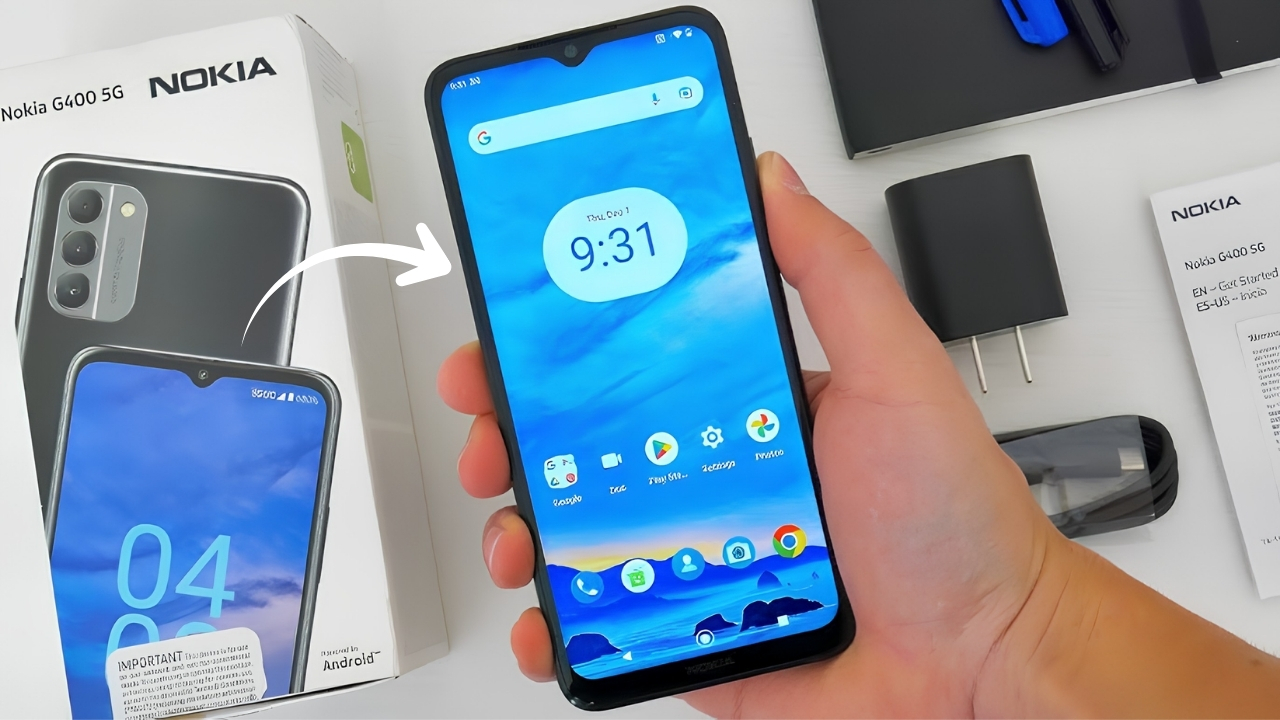
Nokia G400 5G : The Nokia G400 5G remains an interesting name in the affordable smartphone market because it brought several previously premium-looking features into a more accessible Nokia device.
Its combination of 5G support, a fast 120Hz display, a large battery and a 48-megapixel main camera gave it a stronger feature list than many people expected from a Nokia G-series handset when it arrived in the United States in 2022.
A Phone Built Around Everyday Speed
The biggest talking point around the Nokia G400 5G was its display. Nokia equipped the device with a 6.58-inch Full HD+ IPS LCD screen featuring a 120Hz refresh rate.
In simple terms, that higher refresh rate makes scrolling through apps, browsing social media feeds, moving around menus and playing supported games appear smoother than on traditional 60Hz phones. For buyers who had only used entry-level smartphones before, this could be one of the most noticeable upgrades.
The screen also used a 20:9 aspect ratio, giving the phone a tall form factor suited to video viewing, messaging and web browsing.
Gorilla Glass 3 protection was included to offer some extra resistance against everyday scratches and minor accidents. It is not a flagship-grade panel, but it was a meaningful addition for a phone positioned in the lower-cost 5G category.
In the hand, the Nokia G400 5G followed a familiar practical design direction. It did not attempt to look overly flashy or experimental. Instead, the device focused on a large display, a waterdrop-style notch for the front camera and a rear camera module designed to give the phone a modern appearance.
Its Meteor Grey finish kept the overall look understated, which may appeal to buyers who prefer a simple and professional-looking device over bold colors or glossy patterns.
5G Connectivity and Snapdragon Power
At the center of the Nokia G400 5G is Qualcomm’s Snapdragon 480+ 5G platform. This processor was designed for affordable smartphones that need modern connectivity without moving into premium pricing territory.
It supports 5G networks while handling the daily tasks most users expect, including calling, messaging, streaming, navigation, online shopping and casual gaming.
The phone was released with Android 12, making it part of the period when budget phones were increasingly expected to provide current software features rather than rely on older Android versions.
Android 12 introduced a refreshed visual style, better privacy controls and more customization options. For a Nokia-branded device, clean software has traditionally been an important part of the appeal, especially for people who do not want an interface packed with unnecessary apps.
There were different reports and listings around memory and storage configurations before and during the device’s rollout. The version released in the United States was reported with 4GB of RAM and 64GB of internal storage, with support for expansion through a microSD card.
Earlier coverage connected the device with a possible 6GB RAM and 128GB storage configuration, which reflects how regional variants can differ.
Anyone considering the handset should therefore check the exact model number and local specification sheet rather than assume every version carries the same memory setup.
That microSD card support is still useful for people who keep a large collection of photos, downloaded videos, music files or documents on their phone. While many newer devices are moving away from expandable storage, the Nokia G400 5G retained it as a practical feature.
Cameras for Daily Moments
The Nokia G400 5G features a triple-camera system on the rear. The main camera uses a 48-megapixel sensor, joined by a 5-megapixel ultra-wide camera and a 2-megapixel depth sensor.
On the front, the phone includes a 16-megapixel selfie camera placed inside the small notch at the top of the display.
The 48-megapixel primary camera is intended to handle ordinary photography such as family pictures, food shots, pets, travel scenes and social media posts.
In favorable lighting, a sensor of this type can capture detailed images with respectable color and clarity. The ultra-wide lens adds flexibility when photographing landscapes, buildings, groups of people or tight indoor spaces where stepping backward is not possible.
The depth sensor is designed to help with portrait-style photographs by separating the subject from the background. Like many budget phones, the final result depends heavily on lighting and software processing.
It is best viewed as a helpful extra rather than a replacement for the more advanced camera systems found on high-end devices.
For everyday users, the camera setup makes sense because it covers the common situations people encounter. Rather than including a long list of cameras with limited practical value, Nokia focused on a main lens, a wider perspective and portrait assistance. The selfie camera also gives users a capable option for video calls, quick portraits and social content.
Battery Life Remains a Major Strength
Battery capacity is one area where the Nokia G400 5G remains competitive in concept. The device includes a 5,000mAh battery and supports 20W charging.
A battery of this size is commonly associated with full-day usage and, depending on screen time, network conditions and app habits, can often stretch beyond a single day for lighter users.
This matters because 5G connectivity, bright displays and high-refresh-rate screens can put more pressure on battery life. Nokia’s decision to pair those features with a large battery was sensible.
Users who mainly rely on their phone for communication, web browsing, video streaming and navigation may appreciate not having to search for a charger in the middle of the day.
The 120Hz display can be especially enjoyable, but it may also use more power than a standard 60Hz mode in certain situations.
Battery results will naturally vary based on brightness, mobile signal strength, gaming, camera usage and whether the phone stays connected to 5G throughout the day. Still, the large battery gives the G400 5G a practical foundation.
Why the Nokia G400 5G Still Matters
The Nokia G400 5G is not a newly launched smartphone, and prospective buyers should remember that its hardware and original Android 12 software belong to an earlier generation of budget devices.
It was officially released in the U.S. on August 24, 2022, so availability, software support and compatibility should be checked carefully before purchasing in any market today.
Even so, the phone represents an important stage in Nokia’s recent smartphone strategy. It showed that the brand was willing to bring features such as 5G, a 120Hz Full HD+ display, a large battery and a versatile triple-camera system into a more affordable category.
These specifications made the Nokia G400 5G stand out against basic phones that still offered lower-resolution screens, slower refresh rates or smaller batteries.
Also Read this – Yamaha RX100 relaunch in market with powerful engine, mileage is 82KMpl
For a user whose priorities are a large display, dependable battery capacity, expandable storage and basic 5G connectivity, the Nokia G400 5G can still be an appealing device if it is available through a reliable seller and supported by the relevant network.
Its lasting value lies less in being a cutting-edge phone and more in offering a balanced everyday experience built around features people genuinely use.