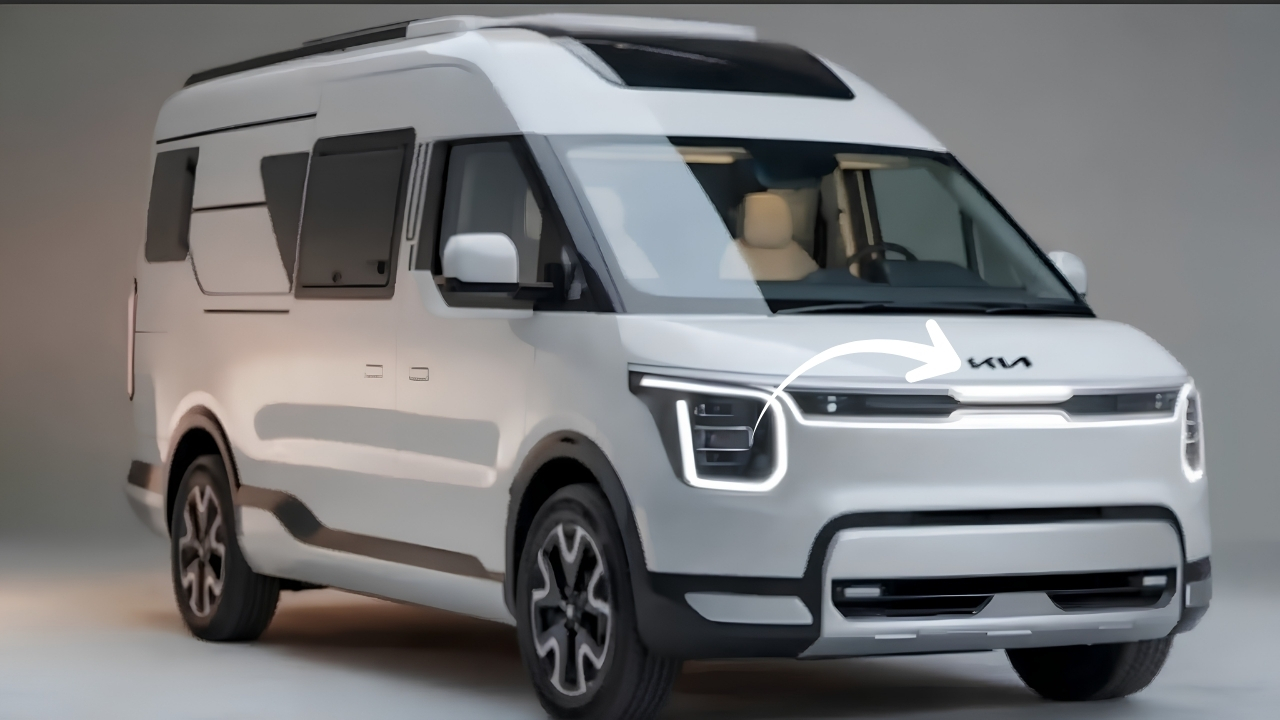
2026 Kia Camper Van : The 2026 Kia camper-van story is generating plenty of excitement in the United States, but the most important detail is often missing from viral posts: Kia has not officially confirmed a U.S. launch for a factory-built camper van.
The vehicle most closely connected to those reports is the Kia PV5, an electric modular van that has been seen testing in Michigan and Indiana, while Kia continues to expand its global Platform Beyond Vehicle lineup.
A New Direction for Kia
Kia is moving beyond traditional passenger cars and SUVs with its Platform Beyond Vehicle, or PBV, strategy. The idea is simple but ambitious: build electric vehicles that can serve several jobs through different body styles and interior configurations.
One version could be a people mover, another could be a delivery van, and another could become a compact camping vehicle.
The PV5 sits at the center of that strategy. In markets outside the United States, Kia has offered the PV5 as a passenger and cargo vehicle. The company has also discussed a broader family of variants, including a light-camper version, a premium passenger model, and an open-bed configuration.
That flexibility is what makes the PV5 especially interesting for Americans who want a smaller, more efficient alternative to a full-size RV or large Sprinter-based conversion.
For many buyers, the appeal is not simply that it is electric. It is the possibility of a van designed from the beginning to support work, travel, gear hauling, and overnight use without feeling like a commercial vehicle with a mattress added later.
The U.S. Picture Remains Unofficial
Recent sightings have fueled speculation that Kia is preparing its electric van lineup for the American market. A PV5 passenger model was spotted near Ann Arbor, Michigan, and reports noted U.S.-style side-marker lighting, a feature that suggests the vehicle could be undergoing local evaluation. Earlier sightings in Indiana and other U.S. locations also attracted attention from EV and van-life enthusiasts.
Still, road testing does not equal a sales announcement. Automakers often bring vehicles to the United States for engineering work, benchmarking, regulatory development, climate testing, or internal research.
Kia has not publicly named a U.S. launch date for the PV5, much less confirmed a dedicated production camper model for American dealerships.
Reports that describe a fully specified “2026 Kia Camper Van” with exact U.S. trims, engines, standard equipment, and dealer availability should therefore be treated carefully unless they come directly from Kia.
That distinction matters. A promising concept, a test vehicle, and a retail-ready U.S. product are three different things. Right now, the strongest confirmed news is that Kia is developing adaptable electric vans and that examples of those vans have appeared on American roads.
Why the PV5 Could Suit Camper Life
If the PV5 eventually reaches the United States, it could make an appealing platform for compact camper conversions. The van’s boxy shape, flat floor, electric architecture, and configurable interior are useful starting points for a camping build.
Rather than competing directly with huge motorhomes, it would likely appeal to couples, solo travelers, weekend hikers, surfers, cyclists, and remote workers who want a vehicle that can still fit into ordinary parking spaces.
A practical conversion could include a fold-flat bed, removable kitchen module, compact refrigerator, storage drawers, window shades, auxiliary battery equipment, and space for outdoor gear.
A pop-top roof could add standing room and a second sleeping area, though Kia has not confirmed such equipment for the U.S. market.
Electric power also offers a few advantages for camping. The quiet operation can make overnight stops more peaceful than in a diesel van. An EV-based camper may also allow owners to power small appliances, lights, laptops, and portable cooking gear through onboard electrical systems, depending on the final vehicle and conversion package.
The trade-off, however, is that added weight, highway speeds, cold weather, steep grades, and rooftop accessories can all reduce driving range.
A PV5 camper would not necessarily replace a large RV for families who need a bathroom, multiple beds, and long off-grid stays. Its likely strength would be flexible, light-duty travel: a vehicle that works as transportation during the week and a small adventure base on the weekend.
Camper Conversions Are Already Emerging
The camper concept is becoming more real outside Kia’s own factory plans. In 2026, VanLab introduced a camping kit for the PV5 that turns the vehicle into a temporary campsite setup, while Vantrack announced a PV5-based electric camper conversion intended for production deliveries.
These efforts show that the PV5’s size and layout are already attracting companies that specialize in van-life equipment.
That is encouraging news for U.S. consumers even if Kia does not initially sell a fully outfitted camper here. In the American market, conversion companies often play a major role in turning cargo and passenger vans into travel vehicles.
If Kia brings the PV5 to the country as a passenger or cargo model, aftermarket specialists could potentially create camping packages tailored to American buyers.
The important caveat is availability. European or Korean conversion kits may not automatically be sold in the United States, and U.S. safety requirements, supply chains, warranty rules, and charging needs could shape what eventually reaches the market.
The Bigger PV7 Adds Momentum
Kia’s van ambitions are not limited to the PV5. The company has also unveiled the larger PV7 electric van, a model positioned above the PV5 and aimed at customers needing more space.
Early coverage has pointed to the PV7’s potential as a future camper base, with teaser material placing the van in a campsite setting and reports indicating that a PV7 camper project is already in development.
For U.S. travelers, the PV7 may ultimately be the more natural fit for a full camper conversion. A larger body could accommodate a more usable bed, storage, galley, and potentially a compact indoor wash area. It could also appeal to commercial upfitters, shuttle operators, mobile businesses, and fleet customers.
But the same uncertainty applies. A PV7 was reportedly spotted testing in the United States shortly after its global reveal, yet Kia has not formally announced that it will sell the vehicle here.
Import costs and the fact that these vans are built in South Korea may complicate the business case for an American launch.
What U.S. Buyers Should Watch 2026 Kia Camper Van
The 2026 Kia camper-van news is best viewed as a developing opportunity rather than a confirmed showroom product. Kia has a credible electric-van program, the PV5 has been tested in the United States, third-party camping solutions are appearing, and the larger PV7 strengthens the company’s potential role in future electric camper travel.
For Americans interested in a Kia-based camper, the smart approach is to watch for an official Kia USA announcement, verified EPA range information, U.S. charging details, warranty coverage, dealer allocation plans, and confirmation of whether the vehicle will be sold as a passenger van, cargo van, or factory-supported camper.
Also Read this – Yamaha RX100 relaunch in market with powerful engine, mileage is 82KMpl
Until then, the Kia PV5 and PV7 remain two of the most intriguing electric-van possibilities in the evolving U.S. adventure-vehicle market.